Anyone who has lived through a July in the Antelope Valley knows what’s coming. Triple-digit heat arrives fast, stays for weeks, and shows zero mercy to air conditioners that aren’t ready for it. That’s why HVAC maintenance Lancaster CA homeowners schedule in spring is some of the smartest money they spend all year. The systems that fail during the first big heat wave almost always gave warnings beforehand. Most homeowners just didn’t recognize them. After more than a decade of servicing systems across Lancaster, Palmdale, and the surrounding high desert, here are the seven signs we see most often, and why catching them now beats sweating through a breakdown in August.
Why Pre-Summer Maintenance Matters in the Antelope Valley
Our high desert climate is uniquely hard on HVAC equipment. Summer temperatures regularly push past 100 degrees, and systems here run longer and harder than in milder parts of Southern California. Add in our wind-blown dust, which clogs filters and coats outdoor coils faster than most regions, and you have a recipe for mid-summer failures.
Spring maintenance matters for three simple reasons:
- Systems fail under load. Breakdowns happen during the hottest stretches, exactly when repair schedules are fullest.
- Small issues become big ones. A worn capacitor or dirty coil today becomes a dead compressor in July.
- Efficiency equals money. A neglected system can use noticeably more energy to deliver the same cooling, and you pay that penalty every single day of a long Antelope Valley summer.
7 Signs Your HVAC System Needs Maintenance
1. Weak or Uneven Airflow
Turn your system on and hold your hand to a vent. Airflow should be strong and consistent. If it feels weak, or some rooms cool while others stay warm, your system is telling you something. Common causes include:
- Clogged air filters, a constant issue with our desert dust
- Dirty blower components
- Duct leaks pulling cooled air into the attic
- A struggling blower motor
Weak airflow forces the system to run longer, driving up bills and wear at the same time.
2. Your Energy Bills Are Creeping Up
Compare last summer’s electric bills to the summer before. If costs climbed without a change in your habits, your system is losing efficiency. Dirty coils, low refrigerant, and worn parts all force longer run times. A professional tune-up restores efficiency and usually pays for itself over a Lancaster cooling season.
3. Strange Sounds When the System Runs
Healthy systems hum quietly. Pay attention to:
- Squealing, often a belt or motor bearing issue
- Grinding, a motor problem that needs prompt attention
- Rattling or banging, loose or failing components
- Clicking that repeats constantly, a possible electrical issue
Noises never fix themselves. They are early, inexpensive warnings of repairs that get costly when ignored.
4. It’s Been More Than a Year Since Your Last Tune-Up
This one is simple. If you cannot remember your last professional maintenance visit, you are due. Annual AC maintenance in spring and heating maintenance in fall is the industry standard, and manufacturers often require documented maintenance to keep warranties valid. Skipping tune-ups to save money is like skipping oil changes. It works fine right up until it doesn’t.
5. The System Short Cycles or Runs Constantly
Both extremes signal trouble. Short cycling, where the system starts and stops every few minutes, wastes energy and hammers components. Constant running that never reaches your set temperature means the system is undersized, low on refrigerant, or losing capacity. Either pattern deserves a professional diagnosis before summer demands peak performance.
6. Dust, Odors, or Stuffy Indoor Air
If you are dusting more often, noticing musty smells when the system runs, or family allergies seem worse indoors, your HVAC system may be circulating the problem. Dirty filters, dusty ducts, and moisture in the system all degrade indoor air quality. This matters in the Antelope Valley, where wind and dust already challenge our homes. Maintenance addresses the system side, and indoor air quality upgrades like better filtration can take it further.
7. Ice, Moisture, or Refrigerant Issues
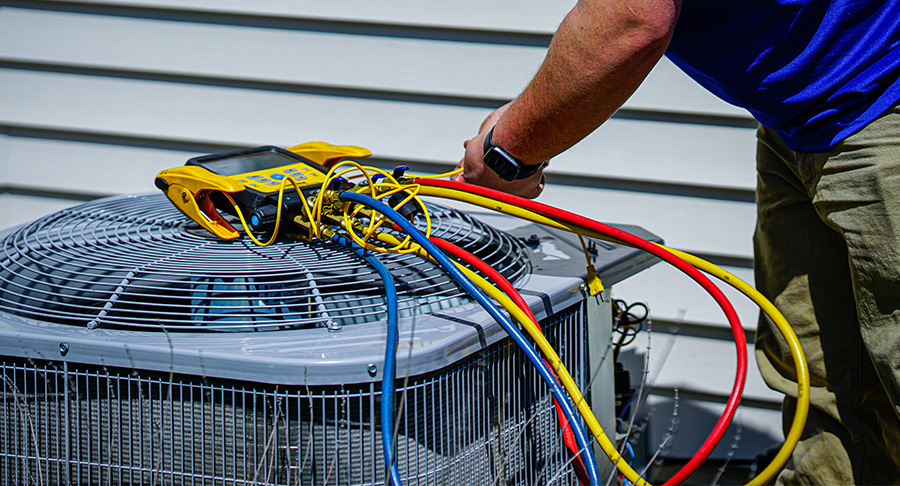
Check your outdoor unit and the copper lines running to it. Ice on the lines in warm weather, moisture pooling around equipment, or a hissing sound all point to refrigerant or airflow problems. Running a system with low refrigerant slowly destroys the compressor, which is the most expensive component to replace. This is a call-now situation, not a wait-and-see one.
What a Professional Tune-Up Actually Includes
A real maintenance visit is far more than a filter change. A certified technician will typically:
- Inspect and clean the condenser and evaporator coils
- Check refrigerant levels and test for leaks
- Test capacitors, contactors, and electrical connections
- Lubricate motors and moving parts
- Inspect and test the blower assembly
- Check thermostat calibration and operation
- Inspect ductwork connections for leaks
- Measure system performance against manufacturer specs
The goal is twofold: restore lost efficiency and catch failing parts while they are still cheap, scheduled repairs instead of emergency ones.
The Payoff: What Maintenance Saves You
Here is the honest math on professional HVAC maintenance:
- Fewer breakdowns. The majority of summer emergency calls trace back to issues a tune-up would have caught.
- Lower energy bills. Clean, properly charged systems simply cost less to run through a 100-degree summer.
- Longer equipment life. Well-maintained systems routinely outlast neglected ones by years, delaying a replacement that costs thousands.
- Protected warranties. Documented maintenance keeps manufacturer coverage intact.
- Priority service. Maintenance plan members typically get front-of-line scheduling during heat waves, which is worth a lot in August.
For Lancaster and Palmdale homeowners, a maintenance plan turns HVAC care into a set-it-and-forget-it routine with spring and fall visits handled automatically.
Frequently Asked Questions
How often should I service my HVAC system in Lancaster, CA? Twice a year: cooling maintenance in spring before summer heat arrives, and heating maintenance in fall. Given the Antelope Valley’s dust and extreme summer temperatures, this schedule is especially important for keeping systems efficient and reliable.
What happens if I skip HVAC maintenance? Efficiency drops, energy bills rise, small problems grow into major repairs, and manufacturer warranties can be voided. Most mid-summer breakdowns we see in Lancaster and Palmdale could have been prevented with a spring tune-up.
How long does an HVAC tune-up take? A thorough professional maintenance visit typically takes about an hour, depending on system condition and accessibility. If the technician finds issues, they will explain the findings and provide repair options before doing any additional work.
When is the best time to schedule AC maintenance? Early spring is ideal, before the first heat wave hits the Antelope Valley. Scheduling early means convenient appointment times and ensures your system is ready before peak demand season fills repair calendars.
Is an HVAC maintenance plan worth it? For most homeowners, yes. Plans typically include both seasonal tune-ups, priority scheduling during peak season, and repair discounts. The energy savings and prevented breakdowns usually outweigh the plan cost, especially with our long cooling season.
Conclusion
Your air conditioner knows summer is coming. The question is whether it is ready. Weak airflow, rising bills, strange sounds, short cycling, and stale indoor air are all early warnings that demand attention now, while repairs are cheap and scheduling is easy. For HVAC maintenance Lancaster CA families can rely on, the winning move is simple: tune up in spring, cool with confidence all summer, and never sweat through a preventable breakdown again.